
Attorney General K K Venugopal on Wednesday defended The Tribunals Reforms Act of 2021 in the Supreme Court and said that many times the top court through its judgments had waded "into the policy domain" and it should "keep in mind separation of powers".

"The fact of the matter is we need policies in place. There are no policies in place to ensure that spectrum is adequately and effectively used. There are no policies in place for audit for companies that actually buy spectrum. We must put in place (policies) to ensure that there is spectrum sharing, spectrum trading," Telecom minister Kapil Sibal said at the FICCI Annual General Meeting.

If accepted, the plan could give the sector Rs 70,000-crore (Rs 700-billion) relief.
India has become the world's fourth largest market for optic-fibre cable after Japan, the US, and China following adoption of new telecom policy, a new study has said.

The fear of another scam pushed the government into a rather long period of so-called 'policy paralysis'. To play it safe, the price of spectrum in all subsequent auctions was benchmarked to the high 3G rates, says Surajeet Das Gupta.

Malaysia's leading telecom operator, Axiata, has backed out of its negotiations to pick up a substantial stake in broadband wireless access operator Tikona Digital.

The Internet is too important to let a few private telecom players decide what the rules will be for consumers, says Rajeev Chandrasekhar, independent member of Parliament who was one of the key petitioners seeking the scrapping of Section 66A of the Information Technology Act.
Foreign Direct Investment (FDI) as a source of funding has shrunk to a trickle for the once lucrative telecom sector with foreign investment inflows plunging to $43 million in the April-September period of the current fiscal.

it will allow users to retain their numbers even if they move from one state to another.

Inter-ministerial body Telecom Commission on Tuesday approved hiking foreign direct investment limit in the sector from 74 per cent to 100 per cent.

When, recently, Bharti Airtel announced a Rs 21,000 crore rights issue, analysts pointed out that its structure was similar to that of Reliance's issue in June 2020. One similarity is that shareholders in both companies have to pay only 25 per cent of the money on application. The rest is to be paid in two tranches. In Bharti Airtel's case, it is within 36 months; in Reliance Jio's, it is within 17 months.

Reliance Jio has sent a second legal opinion to the Telecom Regulatory Authority of India (Trai) on the subject of the potential allocation of satellite spectrum. The letter is written by retired Supreme Court Justice L Nageshwara Rao and argues in favour of auctions, stating that any other method for allocating spectrum apart from auctions could be constitutionally unsound. Business Standard has reviewed the letter.
NTP 2012, approved in May, aims to abolish roaming charges and allow mobile phone subscribers to use same number across country without having to pay extra charges for services once they are outside their telecom circle.
Asserting that leading international consultancy firm A T Kearney had rated India as the third hottest FDI destination, India on Thursday sought investment from Taiwan in telecom and ICT ventures.

However, the Polycab share price is up by nearly 80 per cent while Havells' has risen by 39 per cent. The Sensex has gained 26 per cent in this period. The Q1FY25 results were in line for both companies.

For the PMO this is urgent as the Digital India framework would depend on how the telecom companies perform. It is also linked to the proposed auction of 5G airwaves.

The operating profit growth rate of mobile service providers is expected to double in next two years buoyed by increase in call rates and clarity in policy, credit rating agency CRISIL has said.
NTP 2012, approved in May, aims to abolish roaming charges and allow mobile phone subscribers to use same number across country without having to pay extra charges for services once they are outside their telecom circle.

The Telecom Commission, the policy-making wing of the DoT, will soon take up the issue of divestment in state-run BSNL, Telecom Minister A Raja said on Wednesday.

Taiwan is keen to collaborate with India and help it become a leader in the semiconductor space, Jason Ho, chairman of the Taiwan Chamber of Commerce in India, said, asserting that the Taiwanese companies have the supply chain for things that the Indian market needs. Manufacturing semiconductors - used in electric and hybrid cars, drones, and communication devices - is fairly complicated, entails huge investment, and can be a cumbersome process.

Taking a strong view of Google pulling out some apps from its Play Store, the government on Saturday said delisting of Indian apps cannot be permitted and that the tech company and the startups concerned have been called for a meeting next week. In an interview to PTI, IT and Telecom Minister Ashwini Vaishnaw said the startup ecosystem is key to the Indian economy and their fate cannot be left to any big tech to decide. The minister's comments assume significance as Google on Friday began removing some apps, including popular matrimony apps, from its Play Store in India over a dispute on service fee payments, even as apps and well-known startup founders cried foul.

Telecom operators have opposed sectoral regulator Trai's proposal to review the tariff policy, saying the current regime has appropriate regulatory measures to protect the interest of consumers.
The government on Thursday cleared changes to the current channel down-linking guidelines to allow broadcasters to provide content to telecom service providers for Internet Protocol TV.

From connectivity woes to infrastructure advancements and the startup boom, there is a gulf between claims and reality in India's economic landscape, points out Devangshu Datta.
The government on Friday put on hold the preferential market access (PMA) policy that provided for sourcing of sensitive telecom and electronic equipments and technology from domestic manufacturers over security concerns.
The much-awaited guidelines on foreign direct investment in telecom are expected to be notified this month with companies likely to be given a maximum of four months

Shourie held the telecom portfolio between January 2003 and May 2004 in the NDA regime.

India's security concerns over Chinese telecom equipment are groundless, a Chinese trade body has said, asserting that Chinese companies used same technologies as their Western counterparts and banning them was discriminatory.

The department of telecommunications, in the draft universal licence guidelines to be signed with telcos which recently won spectrum in the 1800 MHz auction of November, has included a new clause for foreign companies.

The second largest telecom operator said auction would avoid possible legal disputes and pave the way for licence extensions.
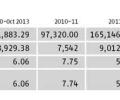
Since August 2013, FIPB has approved two FDI proposals in the telecom sector.
.jpg)
Indian telecom sector has at present around 13 mobile phone service providers with some of them expected to go for consolidation once the final guidelines are in place.

Earlier, during the day, Telecom Minister Kapil Sibal met various operators to discuss the national broadband policy.

The government believes firms which are subject to China's laws could be forced to hand over information to Beijing's security services.

The regulator has also agreed to the one-nation, one-licence proposal, which will make roaming free across the country. But it wants to decide the modalities of the issue.
New Chairman of Telecom Regulatory Authority of India Nripendra Misra said on Wednesday there were no differences between the regulator and the Department of Telecom.
A bench comprising Chief Justice A P Shah and Justice S Muralidhar issued notice to the government and fixed the matter for further hearing on December 10. The petition filed by an NGO, Telecom Watchdog, contended that the government alloted the spectrum without following any policy and cellular operators were provided excess spectrum without charging them for the scarce resource since 2001.
"I want to reiterate that I went as per the telecom policy of 1999, as per recommendations of Telecom and Regulatory Authority of India and vision contemplated by the government. If there have been any procedural lapses. Let it be investigated. No problem at all," Raja told reporters here two days after he unceremoniously put in his papers.
